Sunday, July 18, 2010

Volcanic Tableland Petroglyphs

Only a few miles north of Bishop is the Volcanic Tableland, a landscape of Bishop Tuff rock, formed by super-heated ash spewing from the Long Valley Caldera 750,000 years ago. Around 8,800 years ago, predecessors of the Paiute-Shoshone peoples seasonally inhabited the Tablelands and left petroglyphs throughout the area. Four areas are marked and easily accessible from Fish Slough Road and Highway 6. We spent just a short time at each site, but I'd like to return when the weather is cooler. The mid-day lighting wasn't the best for taking pictures, but I hope these few shots give you a feel for the mystery of the sites. Clicking on the thumbnails may help you make out the petroglyphs in some of the images.

The Fish Slough Petroglyphs encompass a small site. Mortar holes are ground into the rock beneath an overhang, providing shade for the milling of seed or pinyon nuts. Ducking beneath to feel the change in temperature, I came across a desert spiny lizard (Sceloporus magister) apparently doing the same thing.

bisected circle
a common design
a celestial or map?
desert spiny lizard
Sceloporus magister
zebra-tailed lizard
Callisaurus draconoides rhodostictus

The Chidago site contains more images covering a jumbled pile of rock.


The Red Canyon site impressed me the most. The images were the most varied we experienced.


The Chidago Petroglyphs were in a paler rock along a wash. It's impressive that they remain at all. We spooked a poor black-tailed jackrabbit (Lepus californicus), but I snapped a quick picture before we went to find shade like he did.


Because we were in the area, I took Brent to see the Owens pupfish and took this picture of a happy fishy face.

Tuolomne Meadows, Yosemite National Park

I visited Tuolomne Meadows for the first time, entering Yosemite from the east. Even right along Tioga Road the meadows were beautiful, filled with patches of differently colored wildflowers. Most striking were the pale pink swathes of Dodecatheon jeffreyi (Jeffrey's shooting-star).

We took a hike to Elizabeth Lake, below Unicorn Peak, 4.8 miles round-trip with 1000' elevation gain. Although we started at 8600', it was still warm and unseasonably humid, making it difficult to catch our breath. I hadn't thought about it before; humidity may make the air feel more dense, but since water is displacing air the density of air is actually thinner. Because it got cooler and less humid as we went higher, it actually got easier to breathe. Weird !

The trail passes through a forest of lodgepole pine and mountain hemlock, alongside and crossing small streams. As the topography flattens out, the ground is wetter, supporting lush green groundcover...and mosquitoes ! Entering the meadow surrounding Elizabeth Lake, the little buggers were intolerable. We quickly wound our way to the lake's edge, snapped a few pictures, and retreated down to a lower and drier spot for our lunch of Schat's sandwiches. I highly recommend the turkey salad !

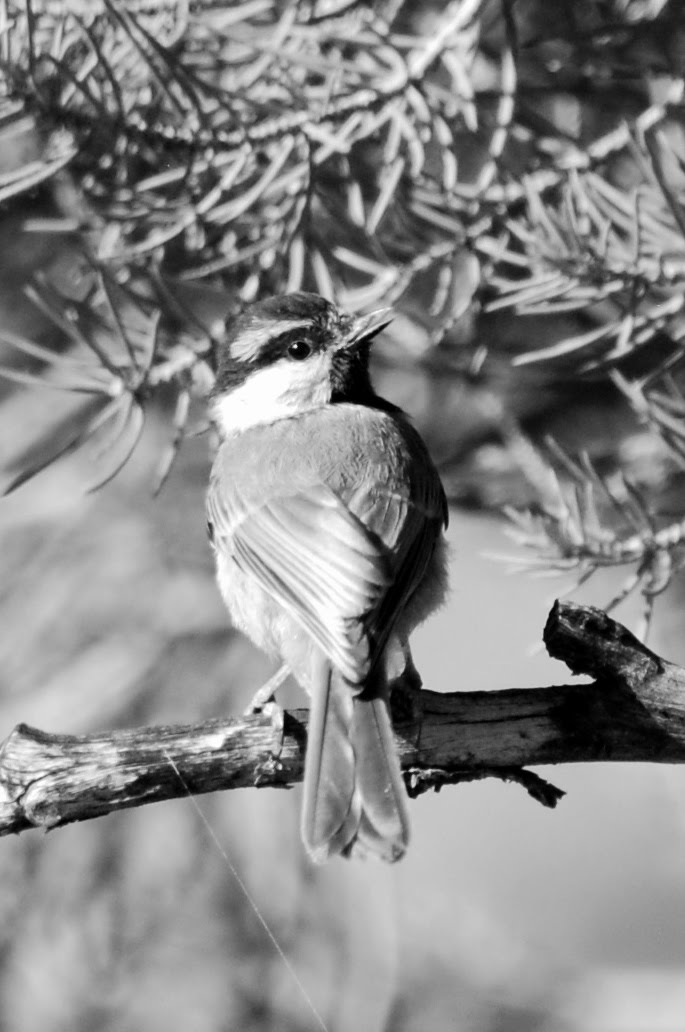
Birds were the usual suspects: dark-eyed junco, western wood-pewee, Steller's jay, American robin, brown creeper, yellow-throated warbler, mountain chickadee, Cassin's finch. But we did experience some neat behavior moments ! First, a junco snatched up an insect from a tree trunk just a couple feet in front of us. I guess the tastiness of the snack outweighed our proximity. In the trees above, I was hearing a call that didn't sound quite familiar... it turned out to be a very demanding fledgling yellow-rumped warbler. We watched for a while as its tireless parents flitted around and returned with morsels for their obnoxious offspring. Still, it was kinda cute...


Lupinus breweri
Brewer's lupine

Triteleia ixioides
pretty face

Castilleja lemmonii
subalpine paintbrush
(with buddy !)

Elizabeth Lake beneath Unicorn Peak


Dodecatheon jeffreyi
Jeffrey's shooting-star

Lembert Dome from Tuolomne Meadow

Half Dome from Olmsted Point

Tenaya Lake from Olmsted Point

Friday, July 16, 2010

Assessing a Burn (with bonus toads !)

On thursday, we went out to a portion of a grazing allotment that had accidentally been burned two years ago. We set up a long-term transect for monitoring plant cover and composition so we can observe how the area recovers from the fire. Following a line-point intercept method, we measured cover every meter along each of three 50m transects. You can do this by dropping a pin flag and looking at what it touches, but we're fortunate enough to have a slick laser with a bubble level that we can use. The method is quick and will allow us to make calculations and reassess the area in a few years.

Monitoring Manual for Grassland, Shrubland, and Savanna Ecosystems (Vol. 1) (pdf)


transect 1


using the laser

Since we were in the area, afterwards we visited the pygmy rabbit (Brachylagus idahoensis) site. First Jeff, our range con, wanted to make sure I saw the "frogs" in a pool filled by an artesian well. They turned out to be cute little toad metamorphs, but I didn't realize until I looked them up that they're Great Basin spadefoot toads (Spea intermontana) ! They don't have any special status in California, but spadefoots are really cool. They spend 7-8 months of the year underground, aestivating in summer or hibernating in winter. This makes the adults difficult to see, but the little toadlets weren't ready to venture out of their birth pool yet. Next year I'd like to visit the pool again and see if I can catch the males calling, which is described sounding like "a flock of ducks slowed down". The well is currently connected to a trough which isn't being used, but when it is the level of the pool lowers. Jeff is interested in altering the setup to disconnect the two and perhaps increase the size of the pool. That would certainly help out the toads!

As we poked around looking at the different pygmy rabbit burrows, we were surprised by the amount of "tic-tac" scat piled around, diagnostic of the species. We even flushed a few, getting pretty good looks at their apparently tail-less behinds as they scurried away. We set up a camera with an infrared trigger outside of a burrow that appeared to be recently used. Even in our modern, digital age, the setup that's believed to be the best is a film camera with flash. I can't wait to find out if we get anything !


Great Basin spadefoot toad metamorph

camera setup outside a pygmy rabbit burrow

Antelope Mountain Avian Point Count

On wednesday, I filled in for our other wildlife biologist completing an avian point count on a ridge with a proposed wind power project along it. It's a challenge to do in a new area where you know maybe half of the bird songs and calls, but I managed. I only had five points to complete, so I had time after each one to chase down any questionable performers.

Species observed: rock wren (+ fledglings), mountain bluebird, spotted towhee, mountain chickadee, northern flicker, mourning dove, blue-gray gnatcatcher, black-headed grosbeak, brown-headed cowbird, blue-throated gray warbler, chipping sparrow, western wood-pewee, juniper titmouse, Clark's nutcracker


The habitat was different than I'd been in so far. Antelope Mountain is 7618' in elevation, covered in pinyon pines and full of volcanic rock (hence the prolific rock wrens). The drive up passes through a sandy deserty area, with cacti and lots of lizards. Just driving down the road, I scared 4 species: western zebra-tailed lizard (Callisaurus draconoides rhodostictus), Great Basin whiptail (Aspidoscelis tigris tigris), long-nosed leopard lizard (Gambelia wislizenii), and a pretty, pale southern desert horned lizard (Phrynosoma platyrhinos calidiarum). At the top were Great Basin fence lizards (Sceloporus occidentalis longipes), dark to match the volcanic rock. I didn't realize until then how few lizards I'd seen elsewhere.


the habitat
vertical baby rock wren
mountain chickadeeblue-gray gnatcatcher

blooming cholla
horned lizard

Wednesday, July 14, 2010

Seeds of Success

"Convince me that you have seed there, and I am prepared to expect wonders." - Henry David Thoreau

In cooperation with other agencies, municipalities, and botanic gardens, BLM coordinates the Seeds of Success (SOS) program. SOS was established to collect and conserve native plant seeds. Seed collections are either held for conservation or used in restoration and research projects. Seeds are collected when and where the plants are abundant.

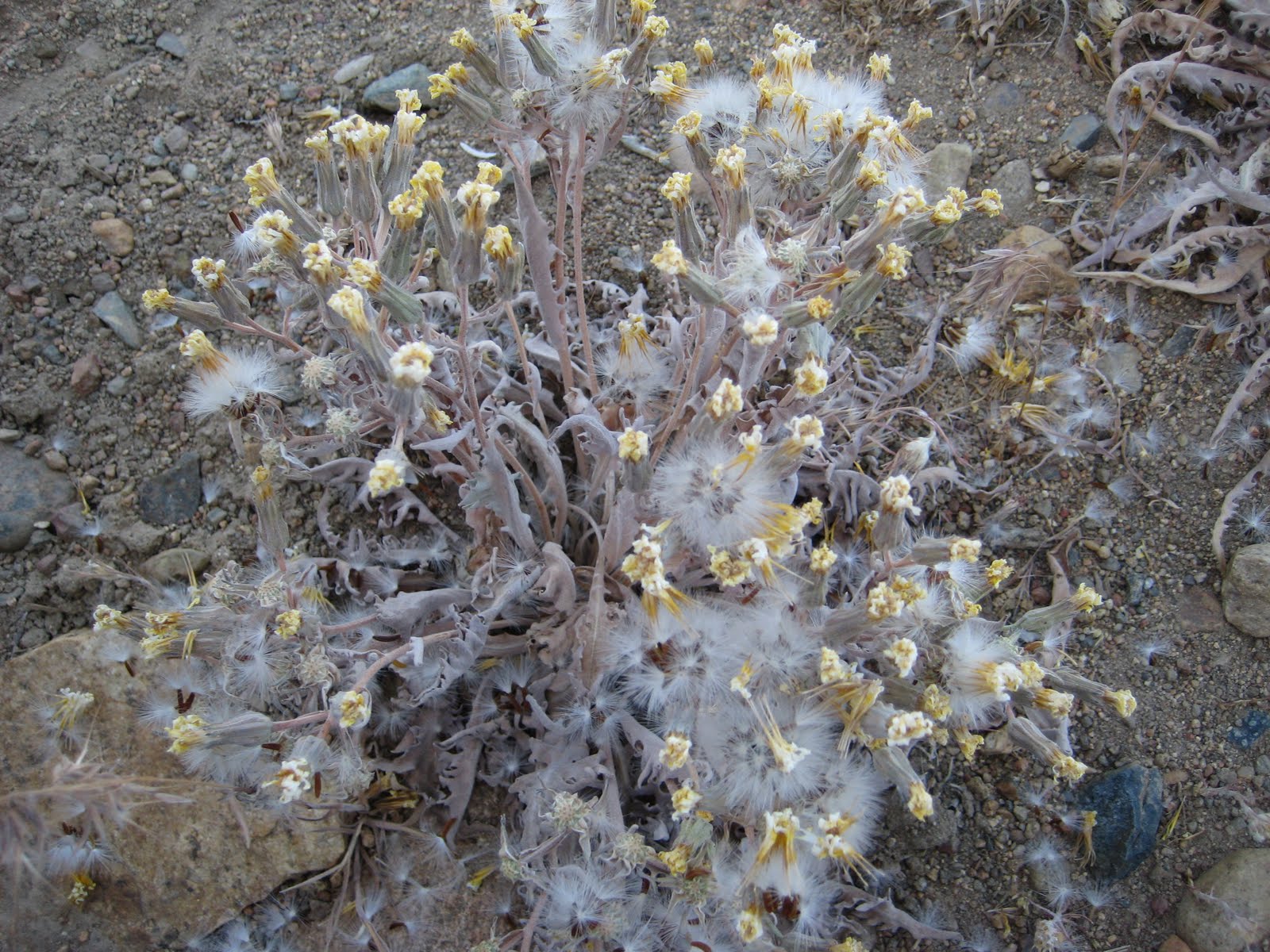
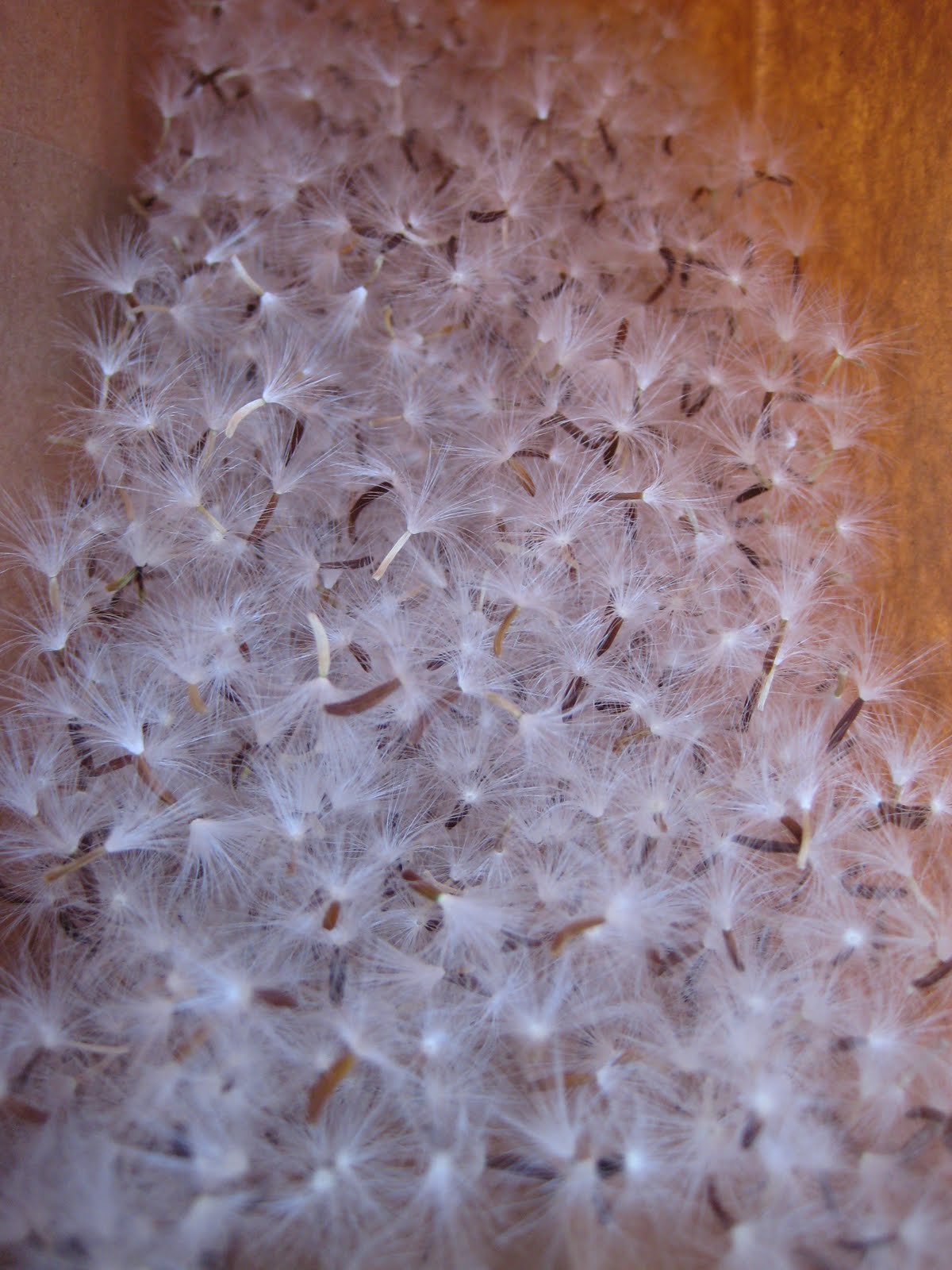
Yesterday, I helped Martin collect the seeds of Crepis occidentalis (western hawk's-beard). The unassuming plant, looking not too unlike a common dandelion, is apparently quite tasty to sage-grouse. While the grouse can and do eat sagebrush, the chicks start off on insects and forbs in the spring and early summer. We'll be able to use the seeds for restoration in the event of a fire.

Seeds of Success Program


Crepis occidentalis
gone to seed

success !

I started my day doing the second willow flycatcher survey at Dogtown. Still no WIFLs, but here are a couple pictures of other cool stuff.


Sidalcea oregana
bog mallow


spotted towhee nest

I would like to thank Mr. and Mrs. Towhee for allowing me to snap the quick picture of their babies. They were awfully mad at me, but I couldn't resist...their little ones are so cute !!!

Incidentally, I just learned that a group of towhees is a "tangle" or a "teapot". You learn something new every day !

Tuesday, July 13, 2010

You know you're a biologist when...

...when someone leaves poop on your desk and you get excited !!!

I am yet to see pygmy rabbits (Brachylagus idahoensis), but my coworkers came across a few, and Casey left me this inspirational note.

Pygmy rabbits are the smallest North American rabbit and are the only rabbit in the United States that dig their own burrows. They are found in the sagebrush habitat of the Great Basin and are dependent on sagebrush for food in winter. The pygmy rabbit is currently under review for listing as an endangered species.

Next time I hope to have pictures of the rabbits themselves...not just their poop, described by experts as "similar to what a Tic-Tac looks like end-on" haha !


Sunday, July 11, 2010

Sabrina Basin, John Muir Wilderness

"I only went out for a walk and finally concluded to stay out until sundown, for going out, I found, was really going in." - John Muir

So reads the sign at the Sabrina Basin trailhead that leads into the John Muir Wilderness of the Inyo National Forest, a 20 minute drive up my street. Brent and I headed out on the trail for a single night backpacking trip. The trail begins just below the Lake Sabrina dam at 9,125' elevation and follows the lake through aspen and willows, becoming sagebrush scrub dotted with conifers and covered with wildflowers this time of year. Continuing higher, you pass through lodgepole pine forest and the trail steepens with switchbacks cut into the granite. We finally reached Blue Lake, only 3 miles in but at 10,400', had lunch, and decided to set up camp there. After a refreshing nap, we set out much lighter and followed a trail to Emerald Lakes, giving us stunning views of the peaks surrounding the Basin and more alpine wildflowers.

We spent a nice evening at camp alongside Blue Lake, enjoying dinner and swatting mosquitoes. It rained in the night, making the extra weight of our tent fly worthwhile. After breakfast, we headed back down the trail, much easier in this direction and minus three meals. We plan to return, probably as a day hike, and explore more of the lakes deeper into Sabrina Basin.


Aquilegia pubescens
alpine columbine


Aquilegia formosa x
Aquilegia pubescens


Sedum lanceolatum
narrow-leaf stonecrop

Castilleja linariifolia
long-leaved paintbrush

crossing Lake George's outlet


lodgepole chipmunk (Tamias speciosus) shows the way


golden-mantled ground squirrel
Spermophilus lateralis, SPELAT

Phyllodoce breweri
red heather

Mt. Haeckel from Emerald Lakes


yellow-bellied marmot
Marmota flaviventris

Thompson Ridge, Blue Lake

clouds reflected in Blue Lake

Bird list: song sparrow, yellow warbler, brown-headed cowbird, dark-eyed junco, mountain chickadee, Clark's nutcracker, red-breasted sapsucker, brown creeper, Cassin's finch, dusky flycatcher, yellow-rumped warbler, golden eagle, Steller's jay, western wood pewee, olive-sided flycatcher, northern flicker.

More pictures are available here. Enjoy !